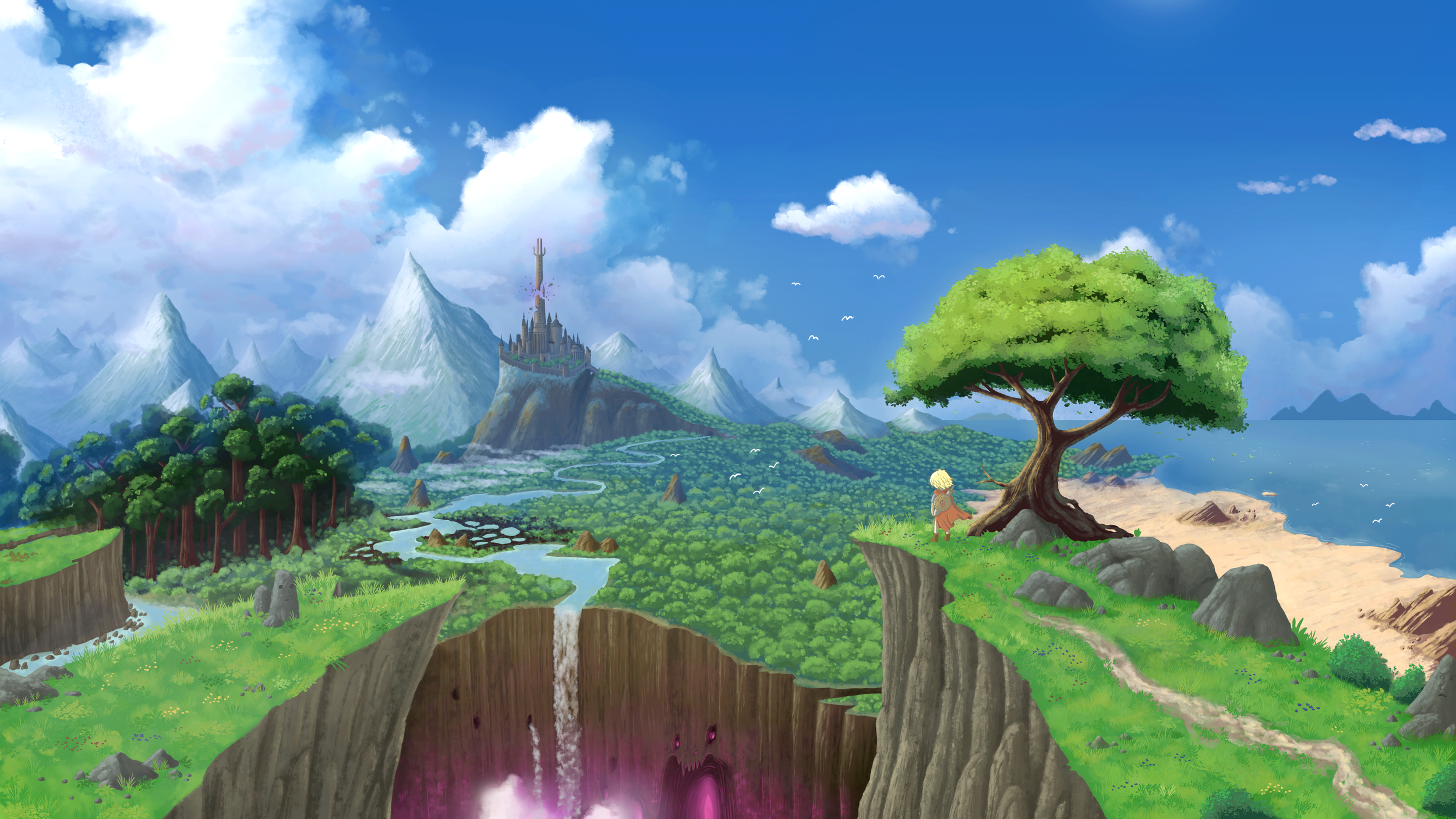
My role as Narrative Designer
While developing The Dreamthief, my role focused on expanding existing story beats into a deeper, more cohesive narrative, connecting the world, characters, dialogue, and quests into an immersive player experience.
I developed characters into more concrete personalities with clear functions within the game, spanning their backgrounds, narrative roles, dialogue, gameplay interactions, and relationships with the wider world.
My work also involved maintaining narrative cohesion across these elements, ensuring that individual story threads supported both the larger narrative and the intended player experience.
As of August 2026, my role has expanded into marketing strategy for The Dreamthief, where I focus on building awareness and outreach through social media content while maintaining the game's established identity and voice.
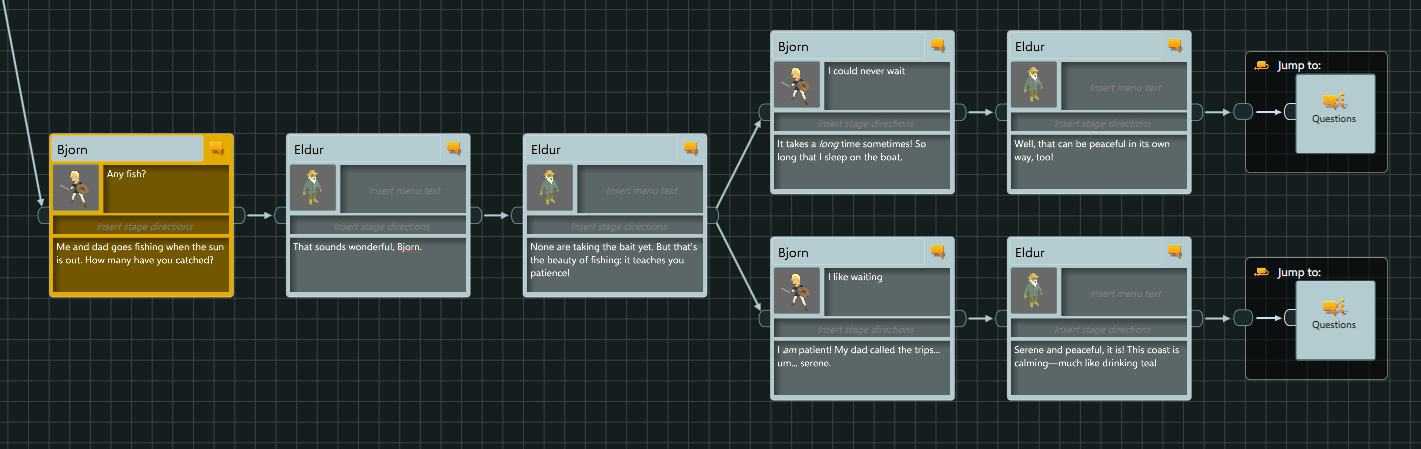
Example Articy:Draft Text
While writing dialogue, I aim to keep each character's voice consistent with their personality, role, and relationship to the player.
For Bjorn, the child protagonist of The Dreamthief, it was important to preserve his imagination and curiosity in conversations with Eldur, whose wiser voice creates a natural contrast between the two characters.
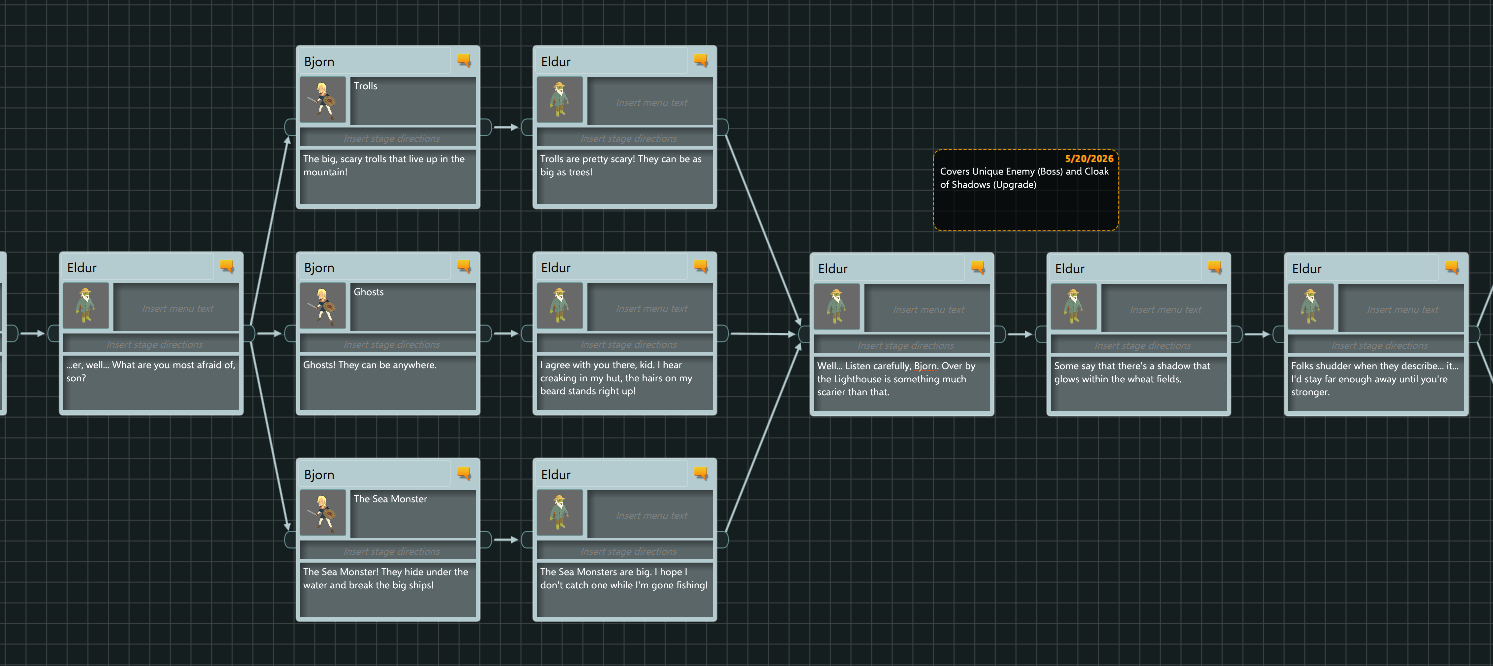
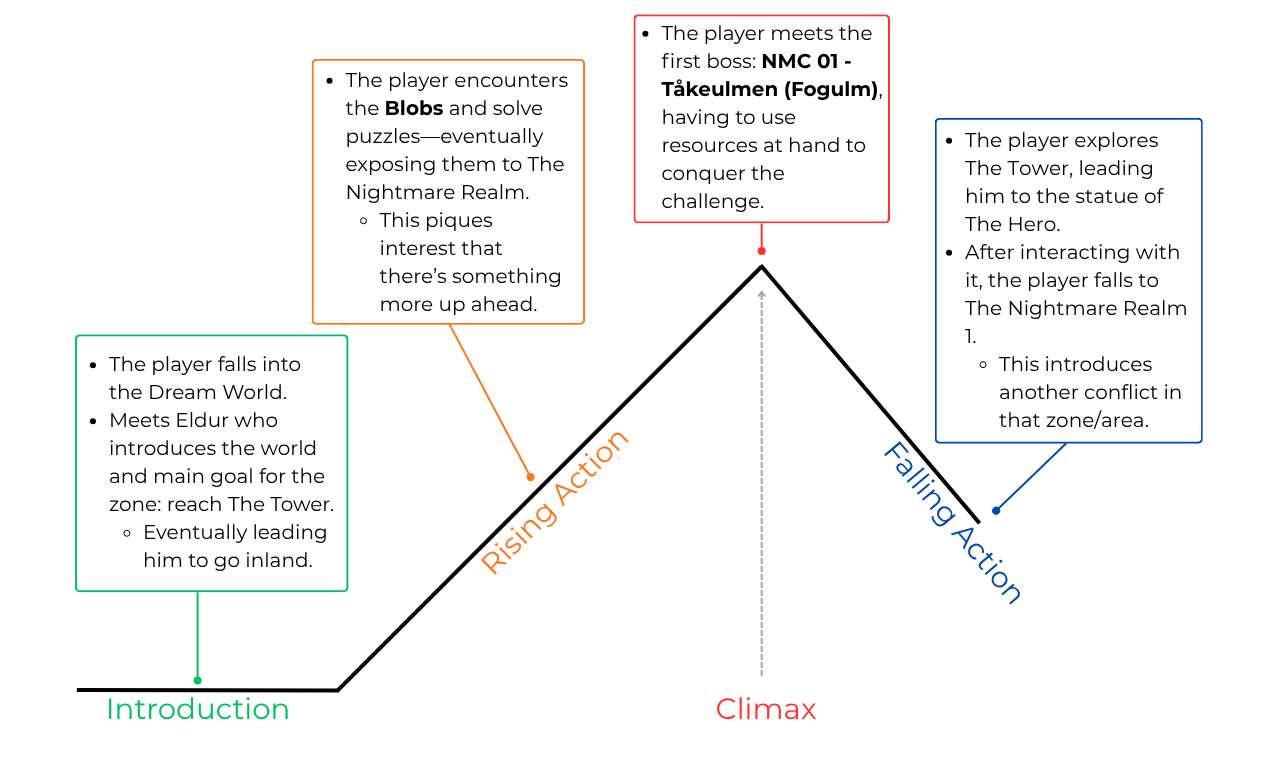
A snippet of the Narrative Diagram for Zone 1 of The Dreamthief, designed as a quick visual reference for story progression and cross-referencing narrative elements across team roles.
What I Learned
Having narrative diagrams, character sheets, zone information aren’t just “paperwork” for the game, but it helps dramatically when translating the story within a team.
One discipline may not understand the importance of an object/character unless it affects how the player experiences the game.
Documentation
…it is writing with player interaction, pacing, gameplay, and implementation constraints in mind. I learned what information is important to show through environment, tell through dialogue, or discard as it creates bloat.
A game can have great lore or story, but how does that translate into the game?
Writing for games isn’t just writing…
I worked closely with the programmer of the team, making sure that the dialogue implements cohesively within engine. This is where I learned how to use Articy:Draft the most as we tested the dialogue and figured out what caused errors.
Additionally, creating the Character Sheets also helped the art team with how the NPCs look based on the personality, backstory, or role the character has.